

Write for One, Reach a Million
Carroll wrote Alice's Adventures in Wonderland for one little girl.

Hey fellow Stackers 👋
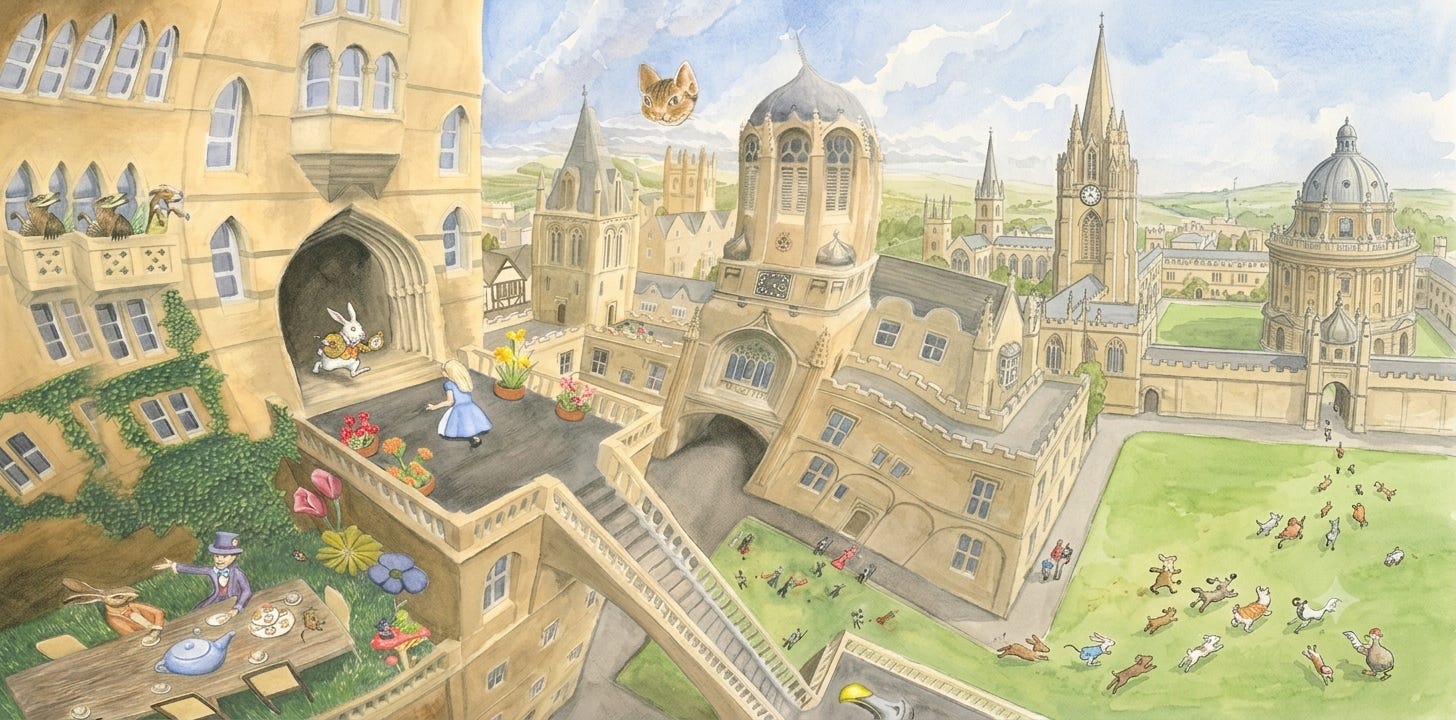
I want to share with you a story about someone who only wanted to make one child laugh — and ended up writing a book read the world over.
He refused every letter addressed to his pen name — sent them right back, each with a printed slip declaring that no one by that name was to be found there. He avoided grown-ups whenever he could. But he loved children; the moment he was among them, he relaxed and could spin fantastical stories for a whole afternoon.
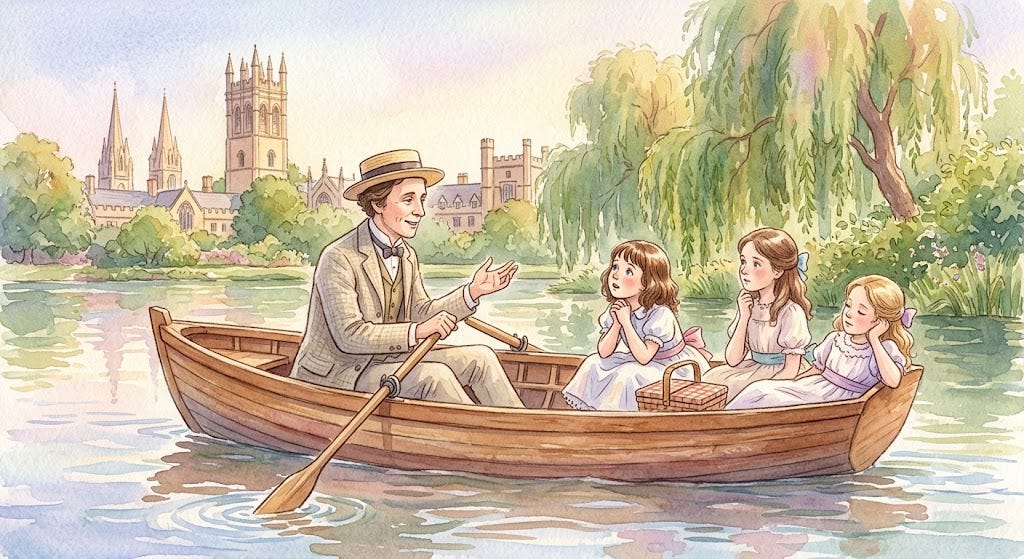
On a summer afternoon in 1862, he took the three daughters of Dean Liddell rowing on the Thames. The boat drifted slowly, the girls grew restless, and they begged him for a story — and the ten-year-old Alice asked specifically for one that was as nonsensical as could be. So, pulling at the oars, he made it up on the spot: a little girl chasing a white rabbit, tumbling head-first down a rabbit hole. Alice was spellbound, and begged him to write it down for her.
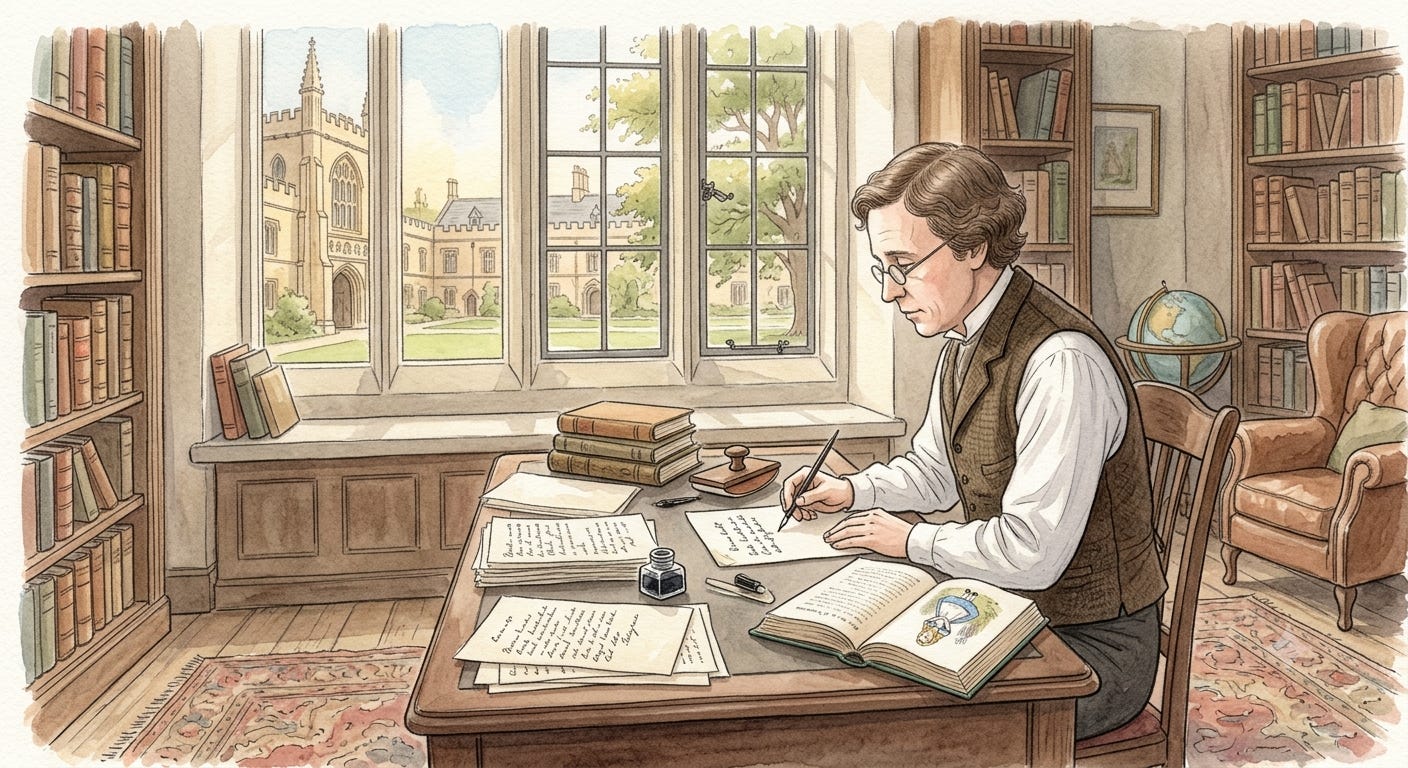
And he actually did — over the next two years, he copied the whole story out by hand in careful script, page by page, drew thirty-seven illustrations himself, and bound it into a slim little book. Not until November 1864 did he send it to her, an early Christmas gift, with a single line on the first page: “A Christmas Gift to a Dear Child in Memory of a Summer Day.”
It was Alice’s Adventures in Wonderland.
The man who wrote it was Charles Dodgson — though the world knows him by the pen name he gave himself, Lewis Carroll.
At first he had no intention of publishing it — it was only a gift for one child. It was his friend, the writer George MacDonald, who talked him into it: MacDonald had him read the manuscript aloud to his own children, and their delight settled the matter. Only then did he expand the story and send it to print. The book was an instant hit. That, a century later, it would be translated into more than a hundred languages and made into films — he could never have dreamed of such a thing.
A little book meant for one child outlived him, and has never gone out of print. What he wrote for one person came to be read the world over.
In the Victorian era, most children’s books were busy teaching kids to behave and go to bed early. Alice was different. It only wanted one imaginative child to be happy.
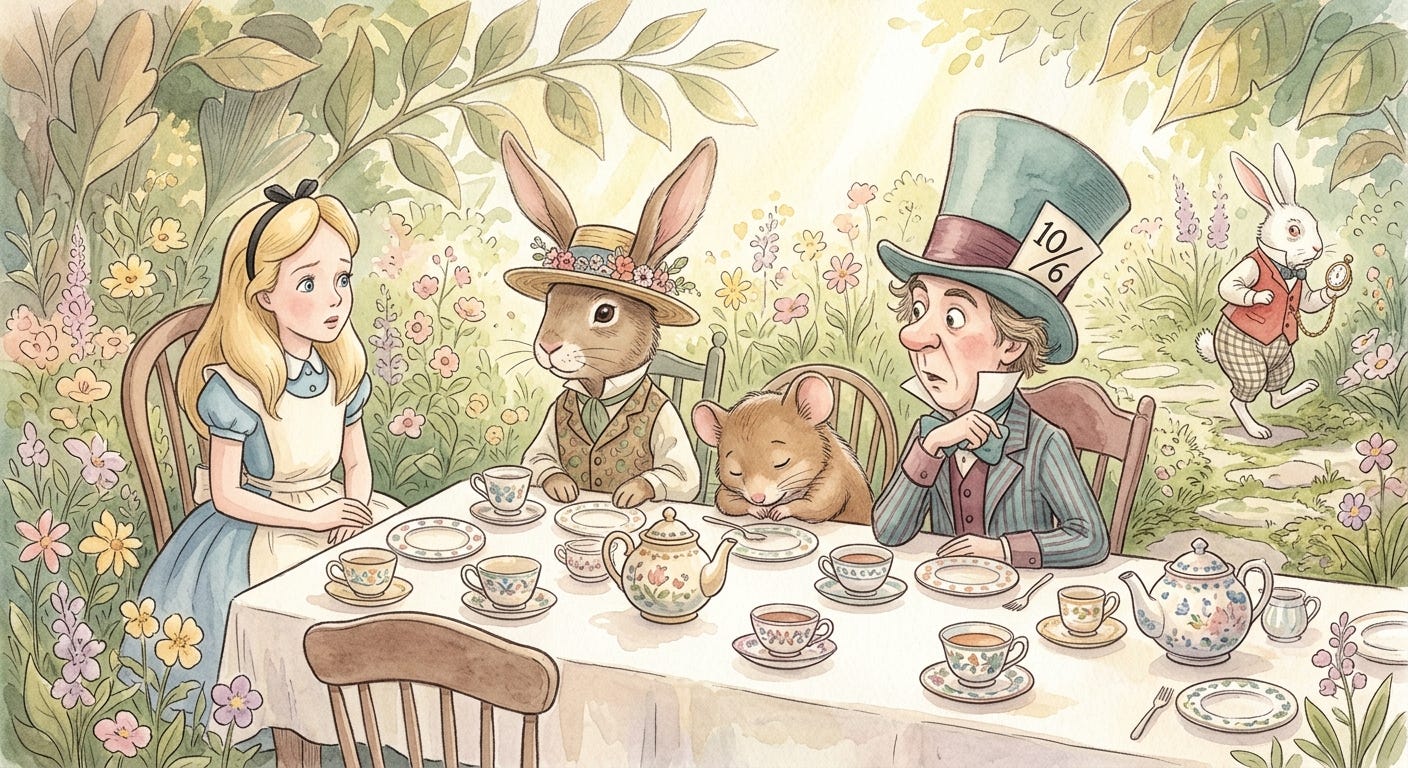
Carroll also quietly stitched what he knew best into the story — the absurd logic of mathematics became a mad tea party, then solemn nonsense like “Why is a raven like a writing-desk?” He kept no dedicated writing hours; all of it grew out of the cracks of daily life — while rowing, while writing letters, filling the paper with riddles and upside-down verse. From beginning to end, he was thinking of that one specific child, the one who would giggle at a single line.
And that little reader, who had asked for a story as nonsensical as could be, probably without either of them noticing, quietly shaped the strange and wondrous world Carroll created.
Reading Carroll’s story, I understand “write for one specific person” more deeply than I used to.
I used to write with my eyes on the numbers: hit publish, refresh, watch whether the line ticked up; rewrite a headline again and again, thinking only of how to get more people to click. “Write for one specific person” — of course I’d heard it, but it hung in the air, weightless, never landing in me. Until I saw this man who stammered in front of adults sit down and write and draw an entire book, stroke by stroke, just to make one child laugh.
In that moment it hit me: what I’m looking for was never a million readers, but that one — the person I truly want to tell the story to. What people remember is never the thing written for everyone, but the singular gift written for the one person in your mind — a gift you prepared with care.
And it isn’t only Carroll. Saint-Exupéry’s The Little Prince was, at first, only meant to comfort his friend Léon Werth, who was having a hard time during the war, by offering him some solace through the prince’s pure, tender heart. The things that go on being passed down through the long years were, at the start, often written for just one person.
In the summer of 1863, the Liddells suddenly cut off contact with Carroll. The page in his diary from those days was later cut out by his family; what happened remains a mystery. We only know that from then on, he was never again close to Alice the way he’d been. Yet he kept writing the story. In 1871, at the end of Through the Looking-Glass, he hid her full name, letter by letter, inside a poem.
He no longer needed her sitting across from him. That one specific reader had already come to live inside him.
Maybe this is what “writing for one person” finally looks like: the one you’re looking for, once they truly enter your heart, never leaves. Even when they’re gone, you always know who you’re speaking to.
So I keep thinking of that little book: a man who could barely get his words out in front of adults, writing and drawing stroke by stroke, just to delight one child beside him. He never thought about a million readers. He only wanted to make Alice laugh.
A child’s laugh. So faint you can barely hear it — and to Carroll, it meant everything.
When I open my notebook and set pen to the page, I think of one specific person — someone who still carries a love for creating in their heart. And then I share this story of Carroll’s with them.
The strange thing is, it’s often exactly this kind of thing that ends up remembered by the most people.
That's really wonderful article
And really good for implementing
Thanks for sharing and keep writing 💫
Thats amazing thanks for sharing