

Without Them, I'd Never Have Seen Van Gogh
A story of family, trust, and the two people who helped the world see Van Gogh

Hey, fellow Stackers 👋
I want to share with you a story about two people who helped bring Vincent van Gogh’s paintings to the world: his younger brother Theo, and Theo’s wife, Johanna Bonger.
July 27, 1890. In a wheat field outside Auvers, France, the wind rolled through the wheat in wave after golden wave.
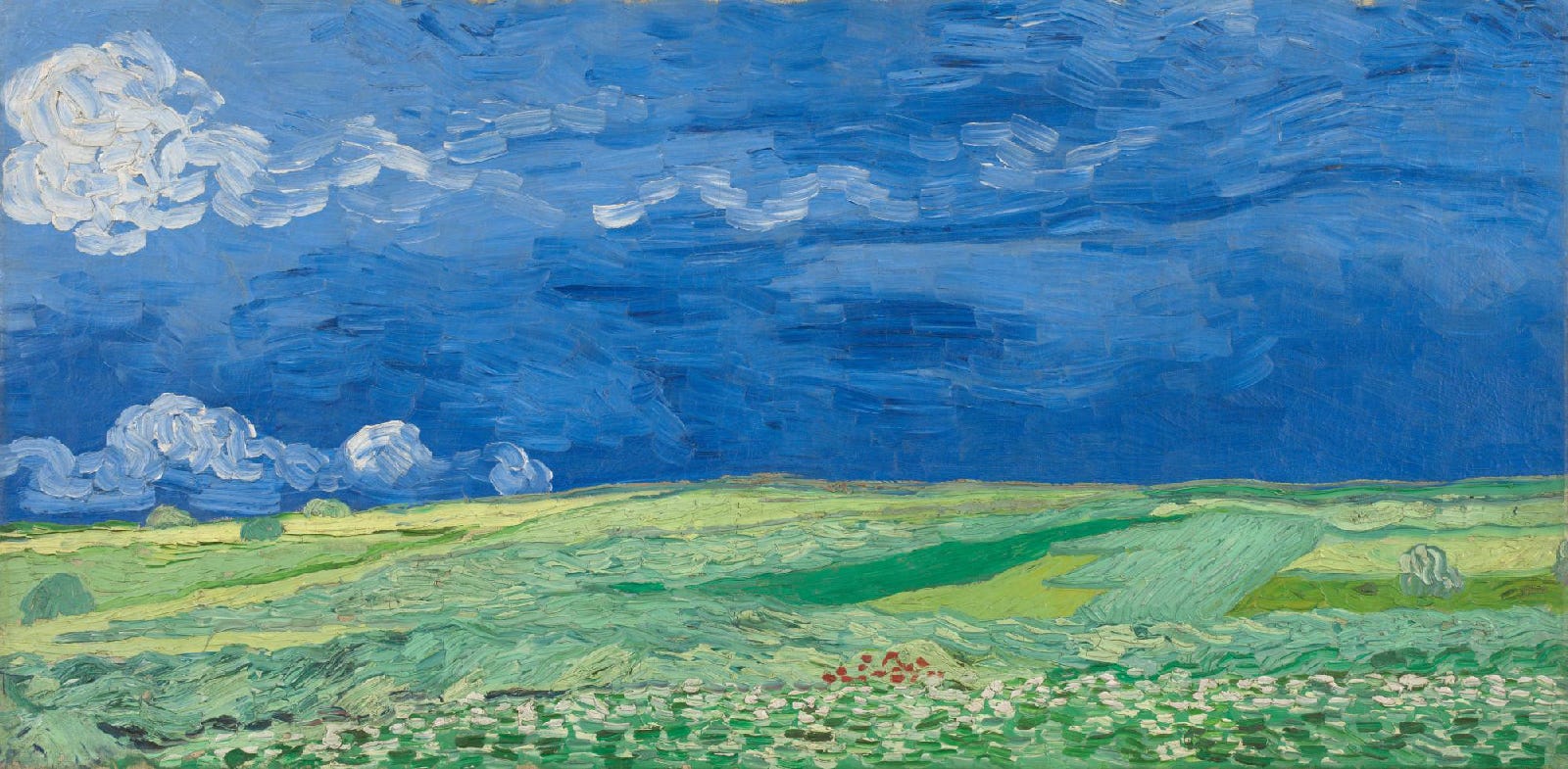
Beneath that beautiful scenery, Vincent van Gogh pressed a gun against his chest and pulled the trigger.
In his coat pocket was an unfinished letter, meant for his brother Theo. It was the last letter he would ever write. Its final line reads:
Ah well, I risk my life for my own work and my reason has half foundered in it. But what can you do?
That sentence is the portrait of Vincent’s entire career: he never found success, yet he never stopped painting. And the man who had been funding that career all along was his brother Theo.
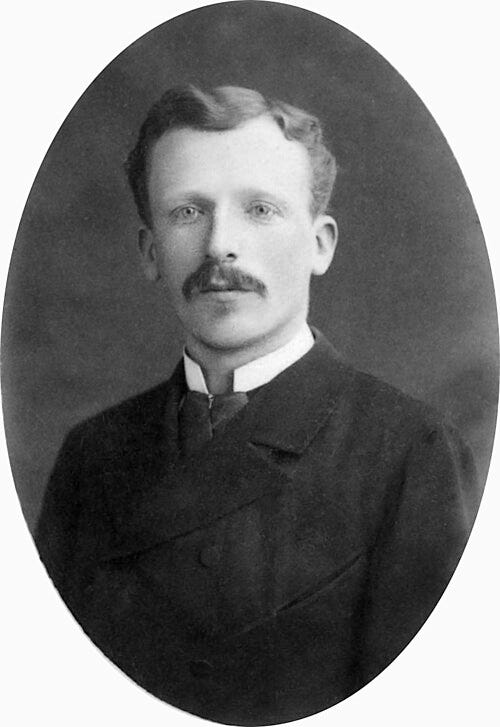
Brotherly Love
Vincent did not start out as an artist. He worked as an art dealer, a teacher, and a missionary in Belgium — none of them successfully — and lived in considerable hardship. It was not until the age of twenty-seven that he decided to become an artist, a decision he owed largely to Theo’s encouragement and support.
Theo worked as a gallery manager in Paris, with a base salary of over 300 francs a month plus a generous year-end bonus. Unlike most dealers, he championed the young artists at the forefront of the revolt against rigid realism.
Theo promised to support his brother, so that Vincent could devote himself completely to painting. Vincent wanted to become a successful artist, and that would take time. "I hope to do as much as I can to help you," Theo wrote, a promise to stand by his brother until he could earn his own living.
Starting in 1882, Theo’s remittances became Vincent’s steady source of income. The amount depended on where Vincent was living — sometimes 100 francs a month, sometimes 150. That was no small sum: in the 1870s, a Dutch family of seven spent about 16 francs a week. But Vincent’s money poured into rent, canvases, paint, models, tobacco, and drink, and almost nothing was left at the end of each month.
Vincent kept painting, but to his regret, nothing sold. In a letter to Theo, he poured out his frustration: “You have never sold a single one of my works — at any price — and in fact you have never even tried.” The disappointment cut deep. Vincent had come to see Theo’s support as a debt he would one day have to repay, and he did not want to keep weighing his brother down.
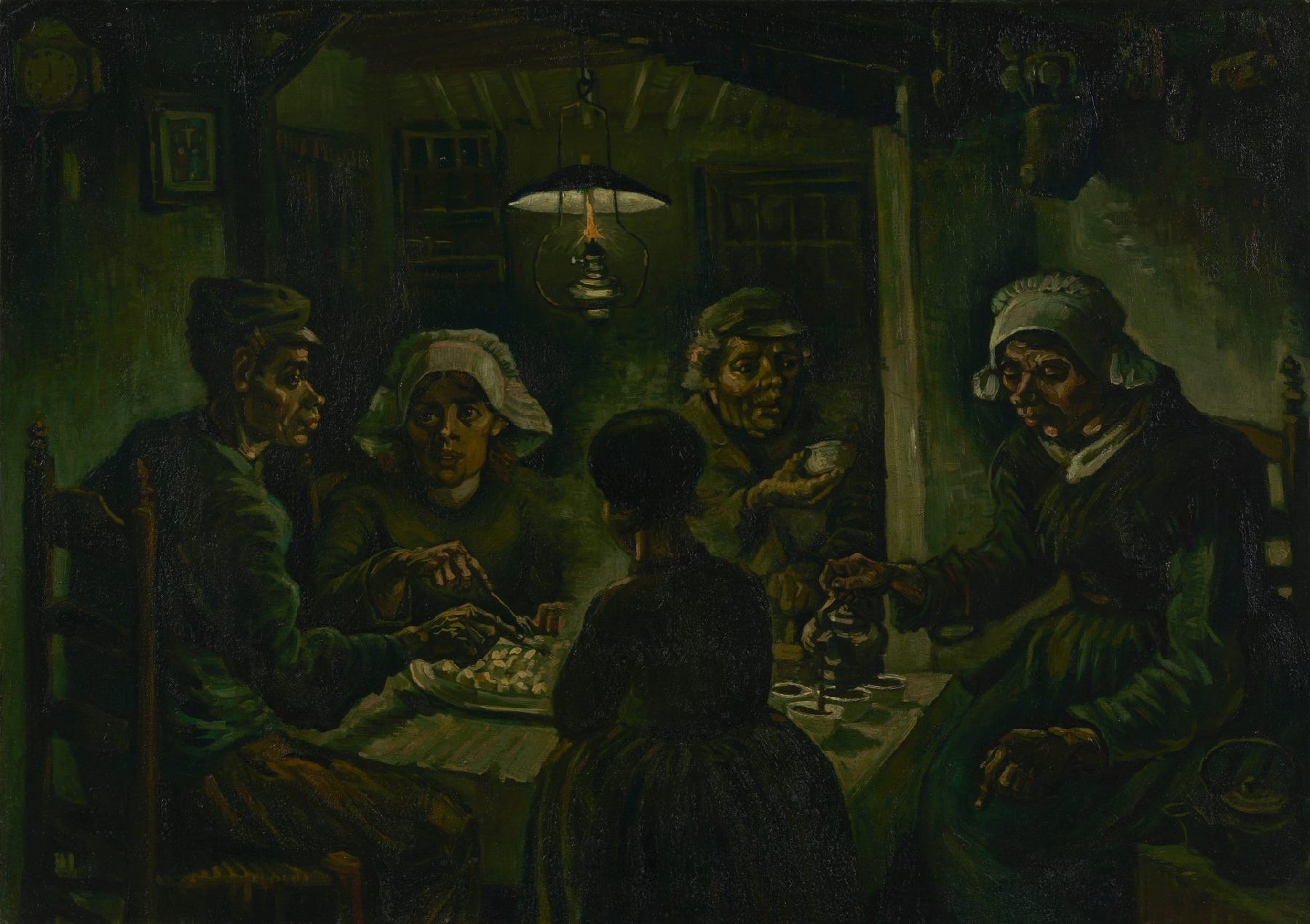
Theo understood Vincent’s frustration. He tried to sell some of the paintings, but no one wanted them. He had his own explanation: Vincent’s work was too dark, and there was no market for it. The work still had to improve.
Paris in those days was the center of the art world. Impressionism was on the rise, and bold experiments in color and technique were happening everywhere. Theo invited Vincent to Paris to experience this creative, color-drenched painting firsthand.
In Paris, Theo introduced Vincent to many painters — the Impressionist elder Pissarro; Seurat and Signac, famous for pointillism. Vincent painted with them, argued with them, traded work with them. The strokes of pointillism, the compositions of Japanese ukiyo-e prints — bit by bit, he absorbed them through these exchanges. Gradually his style transformed: his colors brightened, his brushwork broke free.
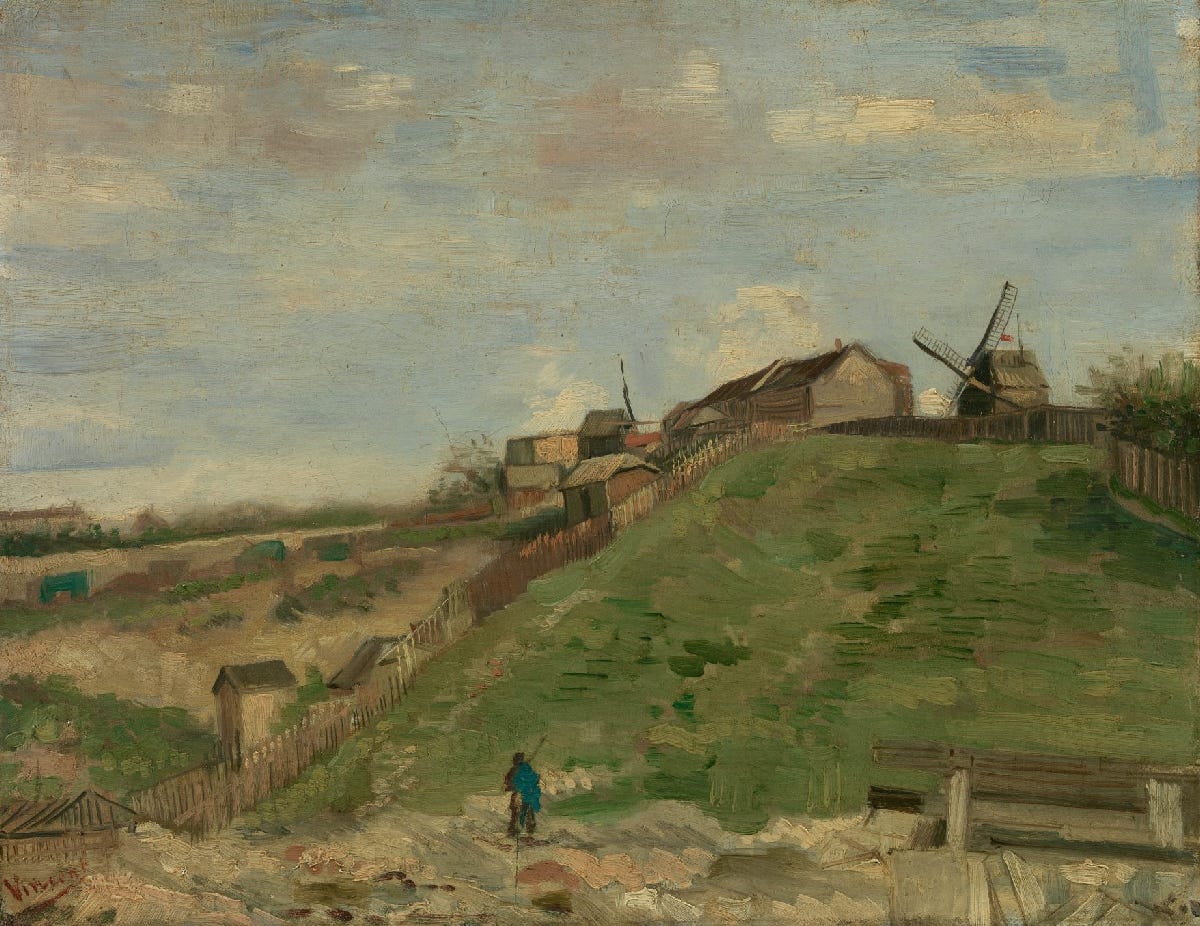
The new style brought him no buyers. Impressionism had yet to enter the mainstream, and dealers rarely took a chance on the unconventional work of a nobody.
Two years passed. Vincent had grown weary of big-city life and decided to leave Paris for Arles, in the south of France; once again, Theo provided the funds. Arles was sunny and beautiful, and Vincent hoped to realize his dream of living and working alongside fellow artists there. In the end, the only artist willing to join him was Paul Gauguin. The two of them lived and painted together in a small yellow house.


The friendship between Vincent and Gauguin lasted only two months. After one quarrel, Vincent, in a fit of agitation, cut off his left ear — by then he was already deep in the grip of mental illness.
On December 23, 1888, two days before Christmas, Theo received word that his brother had been injured. He decided to take the night train to Arles that very night, a journey of some 750 kilometers. He could not stay with Johanna, his fiancée, who had come to Paris to visit him — so from Arles he wrote her a letter, describing everything he had found there:
"I found Vincent in the hospital in Arles... an attack of fièvre chaude, when he injured himself with a knife, was the reason he was taken to hospital... Had he just once found someone to whom he could pour his heart out, it might never have come to this."
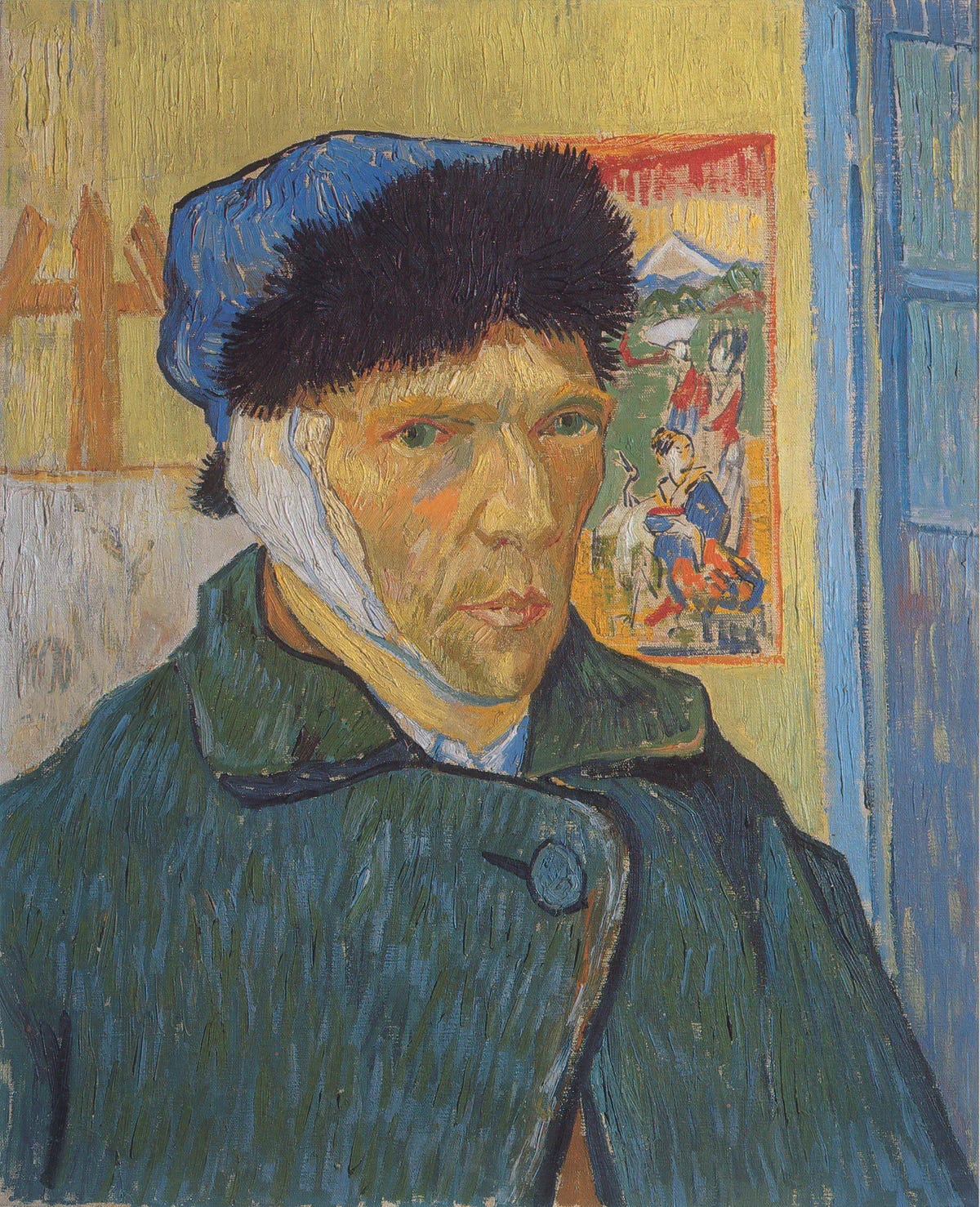
In January 1889, Vincent was finally discharged. The wounds on his body had healed; the wounds inside had not. That May, he admitted himself to the asylum at Saint-Rémy. Painting was the best medicine for his illness, and it was during that period that he painted the famous The Starry Night.
The sky in the painting was a night scene from Vincent’s imagination. In the depths of blue the stars shimmer, while below them lies a sleeping village. By some coincidence, the spiraling halos of starlight look just like the night sky in modern time-lapse photography.


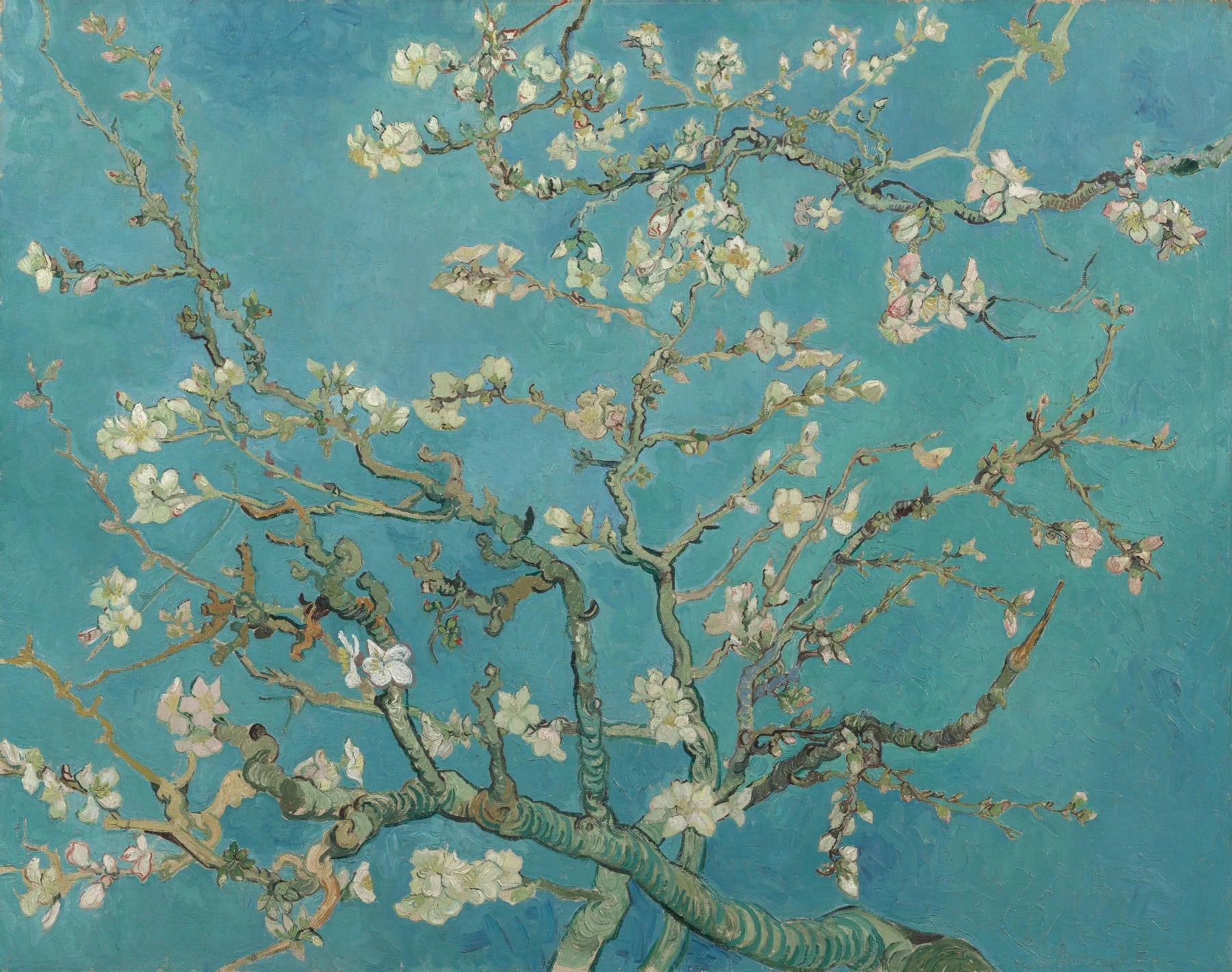
At the end of January 1890, Theo’s wife Johanna gave birth to a boy. The couple named him after Vincent — Vincent Willem — hoping he would grow up to be as steadfast and brave as his uncle. Vincent was overjoyed at the news and painted a whole canvas of almond blossoms against a blue sky as a gift for his little nephew.
In the spring of 1890, Vincent felt increasingly trapped in the asylum and longed to leave. He went to Auvers in northern France, closer to Theo in Paris. Passing through Paris, he visited his months-old nephew. Johanna later recalled: "Theo drew him into the room where our little boy's cradle was... Silently the two brothers looked at the quietly sleeping baby — both had tears in their eyes." None of them imagined that a few weeks later, this happiness would be destroyed forever in the most tragic way.
Vincent’s Death, and Theo’s
On July 28, 1890, Theo received the news that Vincent had shot himself and rushed to his side. On July 29, Vincent died of infection from the wound, with Theo beside him. He was only thirty-seven.
Theo wrote to his mother:
"One cannot write how sad one is... It is a sadness which will weigh upon me for a long time and will certainly not leave my thoughts as long as I live, but if one should want to say anything, it is that he himself has found the rest he so much longed for... Life weighed so heavily upon him."
About six months later, Theo, too, died of illness. More than two decades later, Johanna had Theo’s remains moved to Vincent’s side. To this day, the two brothers lie side by side beside the wheat fields of Auvers.
Vincent’s career lasted barely ten years. His paintings were beautiful, but the mainstream rejected them — oil paint piled thick and furious, almost three-dimensional — and his illness became a source of prejudice against him. All of this meant that Vincent never lived to see his work succeed.
But Vincent was also fortunate. For those ten years, his brother Theo stood behind his work — trusting him, caring for him, giving him both material and spiritual support.
Johanna
When Vincent died, no one knew his name. So how did this tormented genius become one of the most beloved figures in art history?
For that, we have to thank Theo’s wife, Johanna.
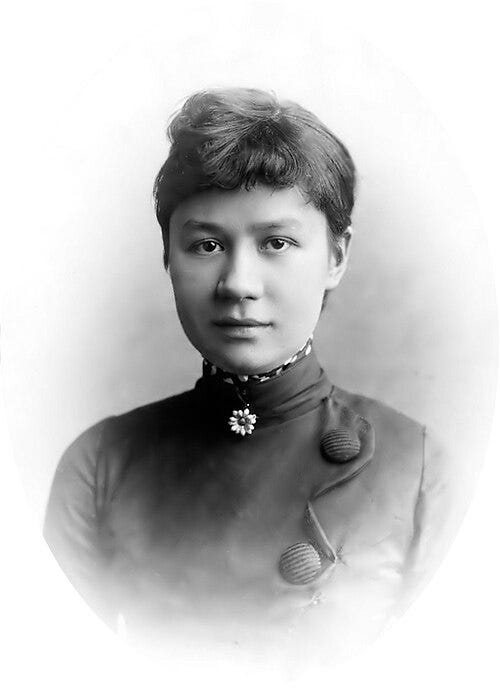
When Theo died, Johanna was only twenty-eight, alone with a son who had just turned one. Her family urged her to burn the paintings piled up in the attic — to everyone else, they were nothing but unsellable “daubs.” One dealer even came to her door offering to buy the canvases just to scrape off the paint and resell the clean cloth. Johanna refused, flatly.
Johanna wanted to fulfill Theo’s dying wish. And she, too, believed in Vincent’s genius and loved his paintings.
In her diary she wrote: "As well as the child, he has left me another task — Vincent's work — getting it seen and appreciated as much as possible."
But Johanna knew nothing of the art market and had no connections, and being a woman closed doors everywhere. She carried a few small paintings around the galleries of Paris, and no one would take them. Back in the Netherlands, she reached out to respected local critics and was met only with ridicule: the colors too garish, the lines too crude, the brushwork too clumsy. She wrote in her diary: "I won't rest until he likes them."
By day, Johanna ran a boarding house in the small town of Bussum to make a living, and nearly every inch of its walls was hung with Vincent’s paintings. By night, she read through the letters Vincent and Theo had exchanged over the years, one by one. Eighteen years, more than six hundred letters. Reading them again and again brought her closer not only to Vincent the artist, but also to her late husband — for the two brothers had been deeply close and wrote to each other constantly.
Johanna realized that if people could first understand Vincent the man, perhaps they could understand his paintings.
Through those letters, a real Vincent appeared before the world: sleepless, lonely, full of self-doubt, yet burning with love for painting, longing for an art that would reach straight into the hearts of ordinary working people. It was a passionate and tragic soul.
Johanna lent the letters out together with the paintings for exhibition. She thrust a whole sack of Vincent’s letters at the critic who had once mocked her, asking him to look at the paintings again through the letters. And she entrusted a batch of them to Émile Bernard, Vincent’s friend from his lifetime, who published them in Paris.
Fortunately, around 1890 the Dutch art world was going through a spiritual turn — the historian Johan Huizinga described it as a current of thought swinging between the two poles of “socialism and mysticism.” Vincent’s art happened to straddle both poles. The critic Jan Veth was persuaded and wrote some of the earliest reviews, saying that Vincent “sought the rough roots of things.”
With the critics’ endorsement and the circulation of the brothers’ letters, Vincent’s paintings came to be seen no longer as “a madman’s daubs” but as a sick man’s struggle against fate.
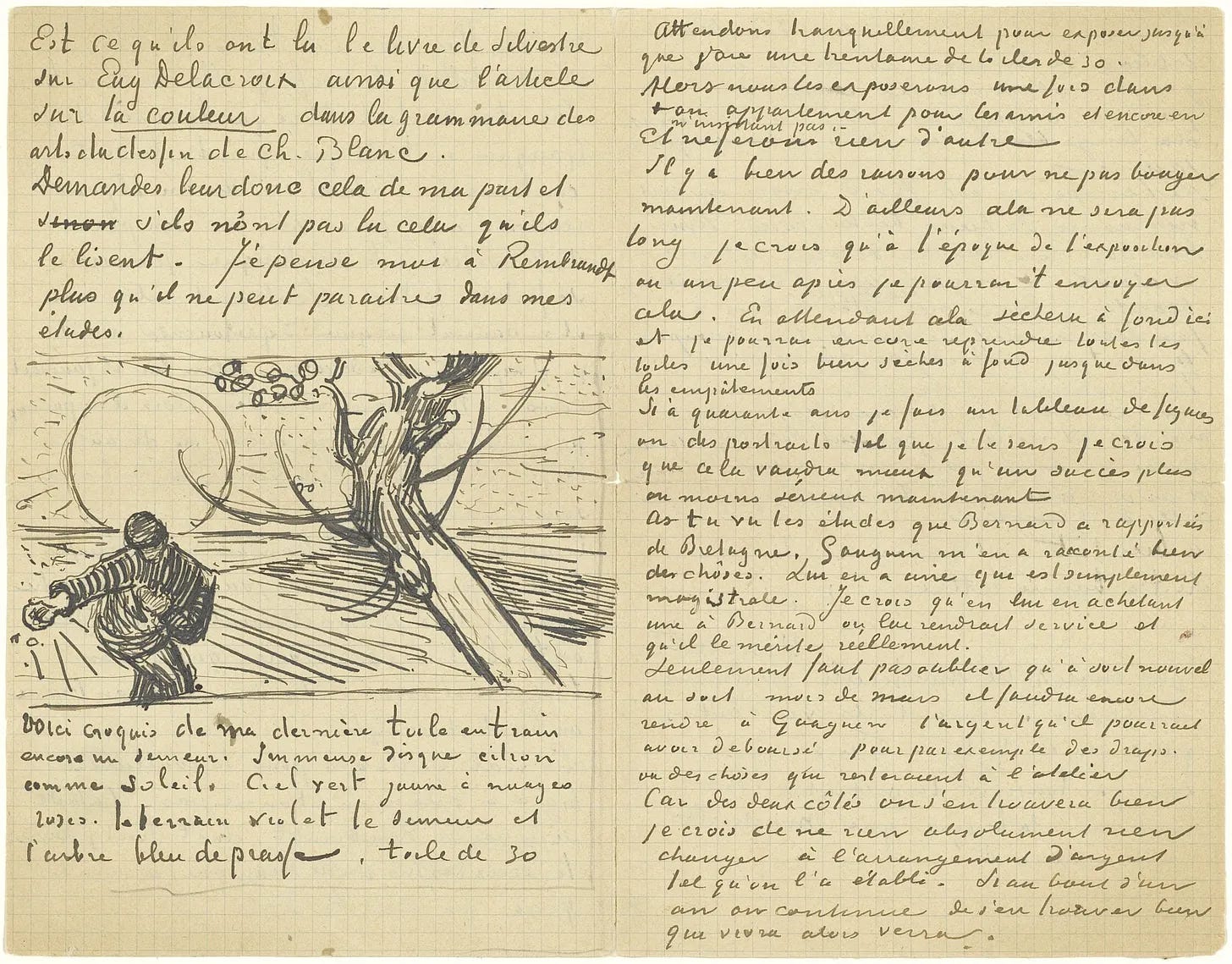
People came not only to value Vincent’s achievement as an artist more highly, but also to understand him more deeply as a human being. Through the letters, they learned of his dreams, his longings, and his struggles — and, of course, his views on art.
His bold use of color was no longer seen as heresy, but as progress. More and more exhibition halls grew interested in Vincent’s work.
To raise the profile of Vincent’s paintings, Johanna also organized selling exhibitions to spark the interest of potential buyers. She made a series of strategic sales, placing paintings with collections open to the public and with collectors around the world — which meant that as many people as possible could see Vincent’s work.
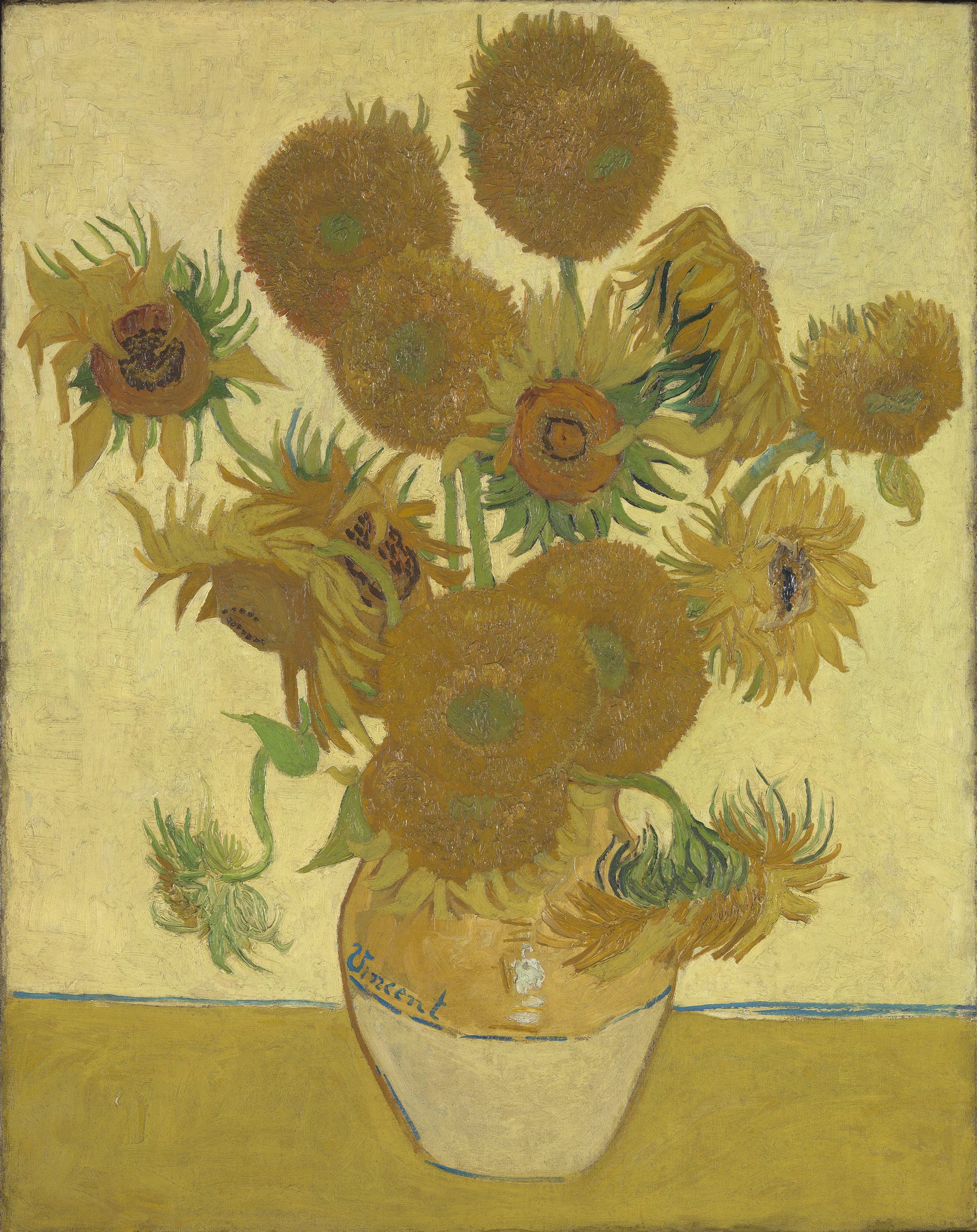
Johanna’s final wish was to publish an English edition of Vincent’s letters, so that his words could reach still more people. It became a race against time — by then she had Parkinson’s disease. She taught herself English and set to work. When she died in 1925, she had translated about two-thirds of the letters. Two years later, the English edition was finally published.
When Johanna died at the age of sixty-two, Vincent’s work was already world-famous. She had realized her own dream, and fulfilled her husband’s dying wish. And Vincent had become the Van Gogh beloved around the world today.
Epilogue
We are used to telling Van Gogh’s story as the tragedy of a genius: misunderstood in life, famous after death. But pull the camera back a little, and at the edge of the frame you will find two more people standing there — Theo, who chose to believe in his brother and quietly supported him from behind the scenes, and Johanna, who spent her life making sure the world saw Vincent’s paintings.
In truth, all three of them persevered: Vincent kept painting, Theo kept believing in him, and Johanna kept showing him to the world.
Without them, I would never have seen Van Gogh’s paintings. That those wheat fields, almond blossoms, and starry nights hang in museums today is because someone shielded them from the dust of attics, the scrapers of dealers, and the prejudice of an era.
To help another person’s creation be seen is itself an act of creation.
Thanks so much for this Blogflyer