


When I was in middle school, I read Dostoevsky’s White Nights under my desk lamp.
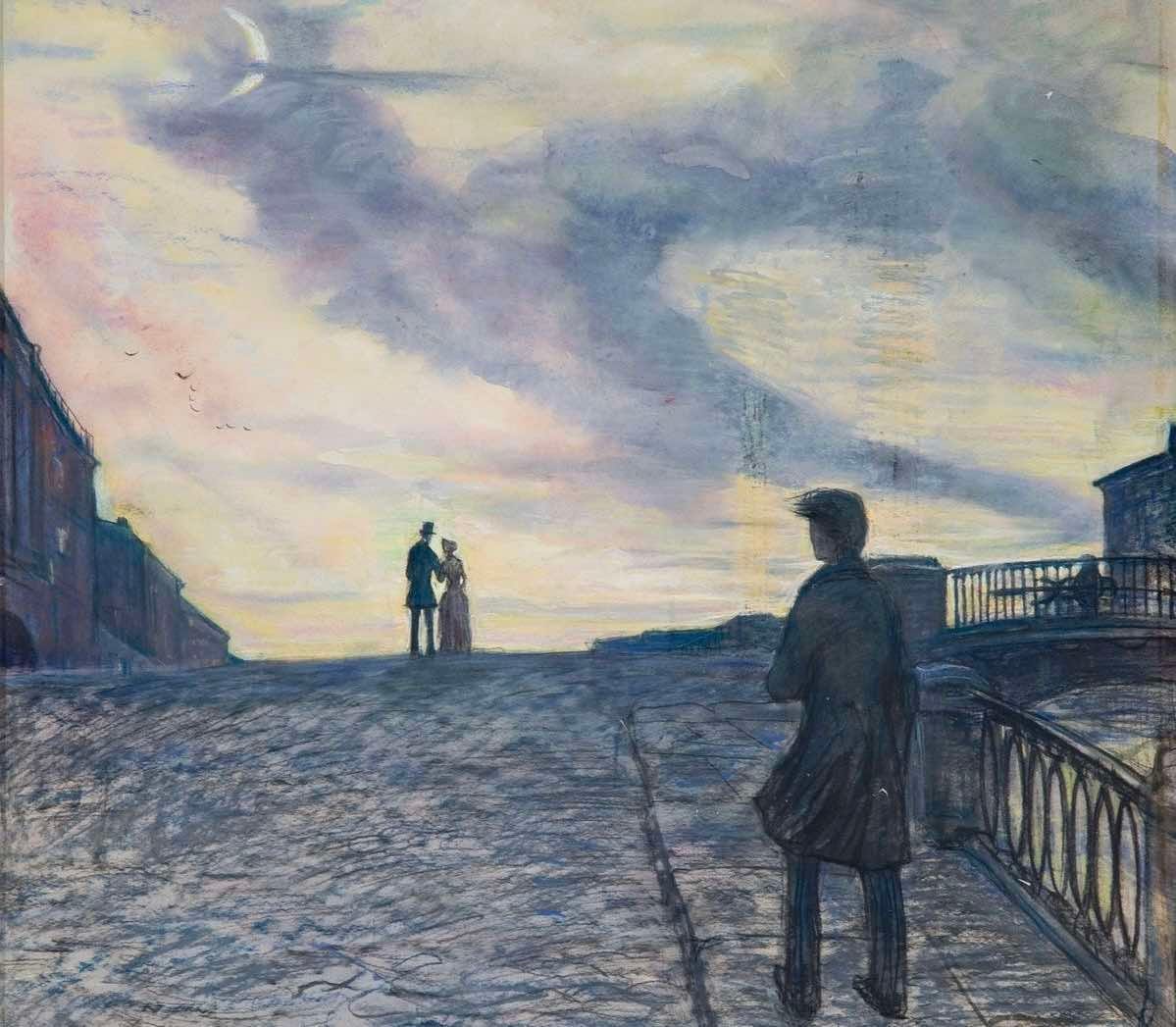
It was a strange and magical moment. Over a century ago, on a damp, bright summer night in St. Petersburg, the “Dreamer” in Dostoevsky’s book wandered the streets, putting all his passion and loneliness into a fictional world. A hundred years later, I was sitting at my school desk, a lonely and confused teenager. But my heart started beating in exact sync with that soul across time and space. Nobody around me understood my emotions back then, but a character in a book did. That gave me a huge shock.
My mentor once half-jokingly told me: “People used to know how to fly. But modern people have too much desire, so they can’t fly anymore.”
That sentence took root in my heart and stayed there for years, slowly fermenting. I started to become increasingly interested in non-realistic stories and ideas. At the same time, I was very curious: why do these fictional stories—mostly novels—have such a powerful attraction?
As you know, a big part of my work is categorizing and organizing history for a massive fictional world. Over time, I realized something surprising: those famous master writers in literary history were just like me. They were deeply curious and confused by the magic of this monster called “the novel.”
They asked: why can a story made of mere words on a page grip our minds so deeply? To break down this magic, they even invented “metafiction,” a way of writing almost like a scalpel.
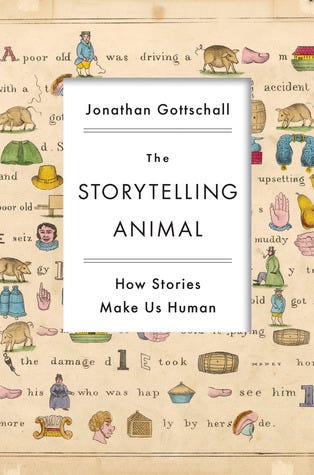
In The Storytelling Animal, evolutionary psychologist Jonathan Gottschall gives a very clever explanation. He uses data from neuroscience and evolutionary theory to try to prove that our brains are naturally addicted to stories, and that stories are an evolutionary mechanism for human survival. Stories can help us train our reactions to real situations in advance to avoid danger. This theory sounds scientific and bulletproof.
But sorry—to me, this is still too dry and too broad. Gottschall’s theory explains why humans need “stories,” but it cannot explain why the focus of literature shifted so fundamentally. It cannot explain why human spiritual needs turned from “epics” to “novels.”
If we just wanted to hear stories to satisfy our brain’s addiction to cause and effect, ancient cave campfire legends or Greek theater tragedies were already enough. But epics are grand. They belong to gods and heroes, and they care about the inevitability of fate and the survival of the group. A person in an epic is just a tiny screw on a giant ship.
Novels are different. They move the camera from high temples down into a broke intellectual’s attic, and into the inner monologue of a nobody. Novels do not care about the ending; they care about the actual process of living for every humble, struggling, and flawed ordinary person. Epics teach us to accept fate. Novels allow us to sneak a peek at the fine details of a soul in our dull daily lives.
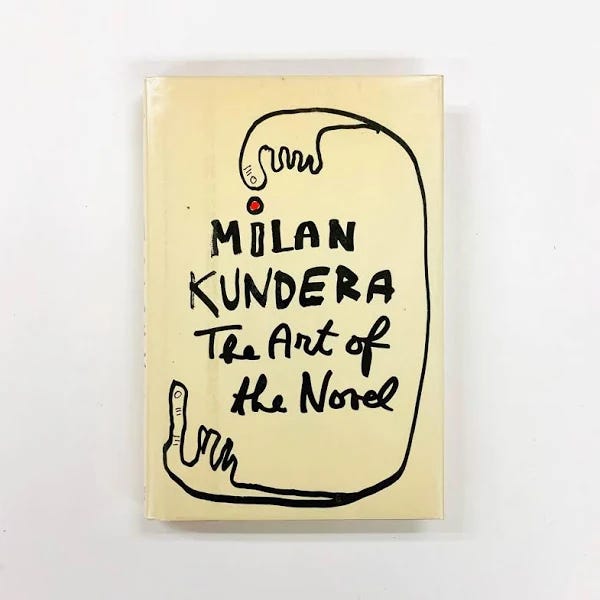
Milan Kundera expressed his wonder in The Art of The Novel: novels have a miraculous foresight. Long before modern bureaucracy and totalizing society arrived, Kafka used Gregor Samsa—a man who turned into a bug—to take us one step back decades early, showing us the alienation and absurdity of modern people under systemic pressure. This “spiritual safe distance” is something the real world can rarely give us directly. A novel creates a fictional space where you can step back and look at the present again from the perspective of another world. Truth in real society often seems singular and absolute. In the world of novels, all absolute truths begin to shake and need to be re-examined, teaching us to think again, to truly and seriously think again.
Maybe you’ve had times when life felt hard and monotonous. When my life was flat, day after day, and sometimes even getting food on the table became a problem, the existence of novels allowed me to temporarily stop worrying about food. I could see more colorful days, and I made it through that difficult time because of them.
In today’s highly fragmented modern world, people are cut into pieces by algorithms, and it is hard to reach real understanding in the world. But miraculously, when we talk about Platform 9¾, or talk about the love, hatred, life, and death we experienced together in words, a quiet “collective memory” is born. Novels cross social class, time, and space, becoming a way for us to recognize each other in a chaotic reality.
I am thankful for all the great novels out there. In this cold world, they have built us countless warm shelters, lighthouses of foresight, and spiritual havens.
The path of writing novels is often rough, and many deeply influential novelists had lives full of hardship and misfortune. We can talk about their stories slowly another time.
Tonight, let us fly on these wings of words for a little longer.