

Where Do I Stand on AI?
The typewriter raised a similar question 140 years ago.

Hey, fellow Stackers 👋
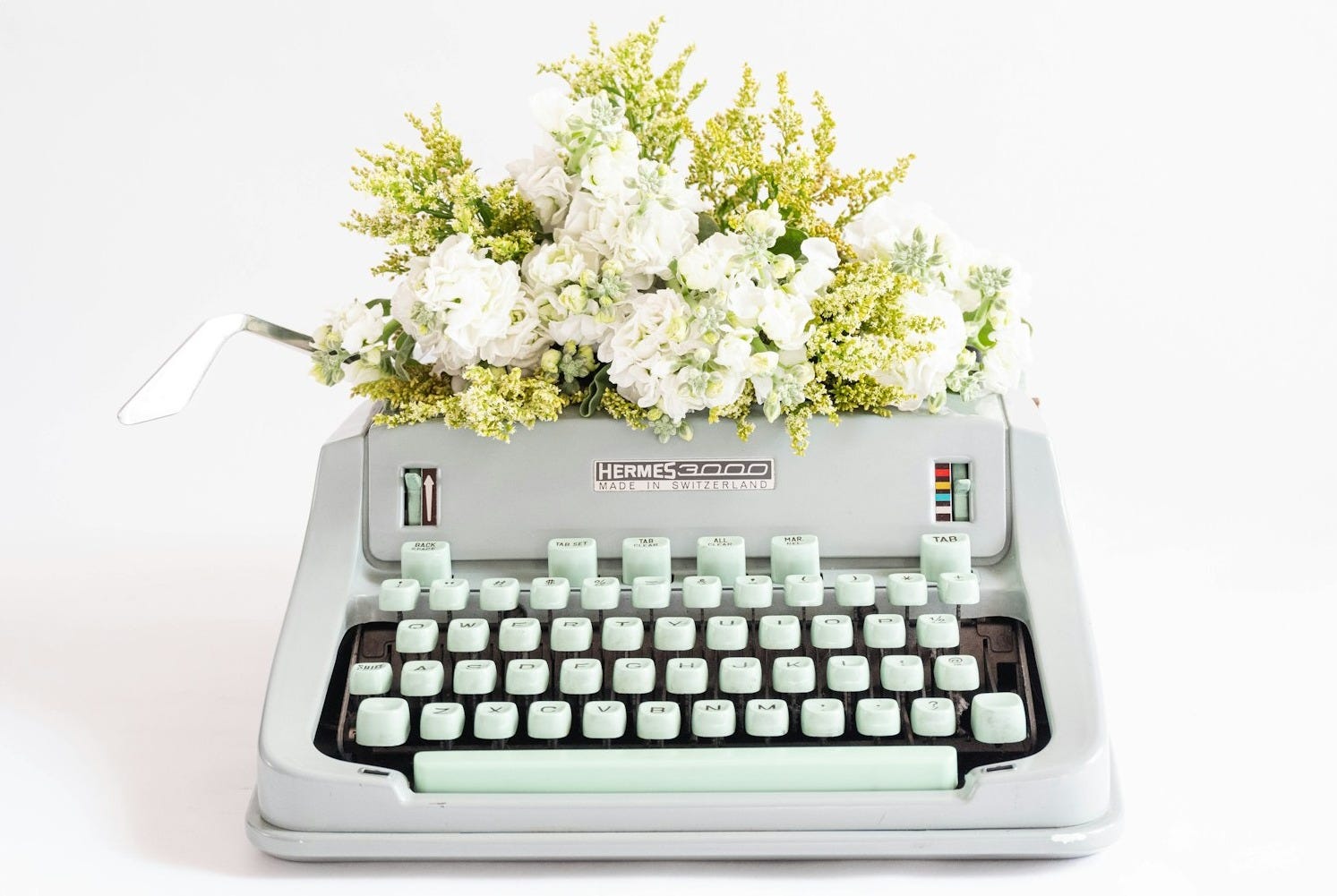
Before writing this piece, I asked AI to write me an opening. It gave me four.
I didn’t use any of them. Not because they were badly written, but because I still didn’t know what I actually wanted to say.
AI is the newest tool we creators have, and it can do almost anything. So where do I stand on it?
I couldn’t answer that. So I went looking through history instead.
In the history of creative tools, the typewriter marks one of the turning points.
In February 1882, a Malling-Hansen writing ball arrived at Nietzsche’s rooms in Genoa.
By then Nietzsche’s eyesight had badly declined. He could hardly make out his own handwriting, and long stretches of reading or writing left him in pain. For him, the machine was not just a faster way to get words down. It was more like a pair of hands standing in for his eyes: once he had the keys memorized, he could keep writing with his fingers alone, without staring at the page.
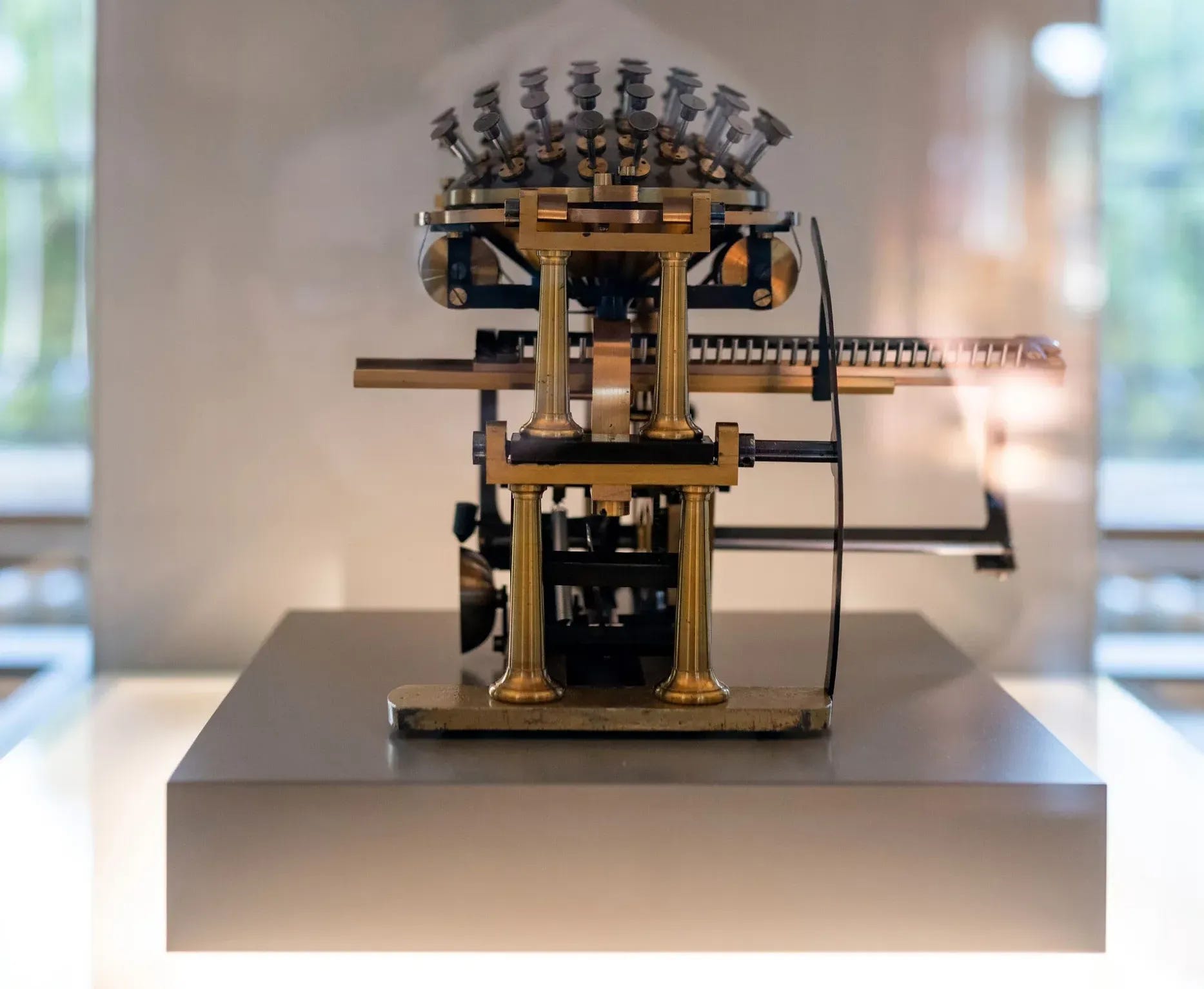
At first he was hopeful enough to write it a short poem: “Writing Ball is a thing like me: made of iron, yet twisted easily — especially on journeys.”
After Nietzsche sent his first typed letter, his friend Heinrich Koselitz noticed that the sentences felt unusually terse and forceful. He offered a guess:
Perhaps you will through this instrument even take to a new idiom. At least in my case, that is quite likely. I do not deny that my “thoughts” in music and language often depend on the quality of pen and paper.
A few days later, Nietzsche wrote back:
You are right, our writing equipment takes part in the forming of our thoughts. When will I get my fingers to print a long sentence!
The pen moved continuously; the key struck once. A change in how he wrote became, to some degree, a change in him.
Nietzsche’s time with the machine did not go smoothly.
The delicate writing ball had already been damaged in transit, and the repairs that followed didn’t fix it so much as introduce new faults. Between his failing eyesight and his unfamiliarity with the keys, he kept missing the one he wanted and had to correct it by hand, over and over. Typing cost him no less effort than the pen had.
About six weeks later, after nearly sixty pages, he put the machine away.
Nietzsche’s story with the typewriter was over. The typewriter’s own story was just beginning.
It made writing faster, and for the first time words appeared on the page as they were written, neat and almost printed.
This was the height of the Industrial Revolution. Business was expanding fast, paperwork was multiplying, and pen and paper could no longer keep up. The typewriter met that need. Companies bought machines in bulk, and a new kind of job appeared: the stenographer, the typist. One account notes that in 1870 the U.S. census counted only about 154 shorthand writers; by 1899 there were roughly 35,000 stenographers and typists. The typewriter had a lot to do with that.
As stenographers multiplied, the copyists who had made a living writing documents out by hand quietly disappeared.
And the neat, uniform output of the typewriter worried people at the time.
In the late nineteenth century, a handwritten letter carried more than words. The weight of a stroke, the slant of the script, even the crossings-out and the pauses left behind — all of it could be part of what the writer was feeling. Seeing a familiar hand was a little like seeing the person.
The typewriter erased those differences. No matter who pressed the key, the same letter appeared on the page. An early typed letter could come across as cold, even rude: why wouldn’t the sender write it by hand?
From the Typewriter to AI
The typewriter changed how we enter and present words. AI reaches deeper. It touches the content itself.
I was starting university around the time OpenAI released ChatGPT. At first I mostly used it as someone to ask questions of. My general education courses always ended in an essay, and I could hand the model the requirements along with a few of my own thoughts and get the whole thing back, finished.
The more I wrote that way, the lazier I got. Going from an idea to a finished piece used to take a lot of thinking. AI shortened that path, and leaning on it too much let me skip thinking about the thing itself.
It changed the way my mind worked: instead of reasoning something out, I asked the model for the answer. That wasn’t what I wanted. I had finished an essay, an AI-generated essay, and nothing was left over. Nothing had come out of it that I could keep, and I hadn’t understood the subject any better.
I think I’ve found part of an answer.
The question isn’t what my position on AI should be. It’s this: when everything can be handed over to it, what do I still want to do myself?
Look back at Nietzsche. His reason was simple. He wanted writing to hurt less. And when the machine stopped helping him, he put it away.
So what does creating mean to me?
Creating always makes me think, and that is the part I like. I don’t want AI to think in my place. I’d rather have it take part, and help me get further.
AI isn’t a required field on the form. It’s an optional one. Creating takes a long time, and it doesn’t need to be there for all of it.
Whether a typed page is impolite, whether an essay made with AI is disrespectful — people will land in different places on that.
For me, a letter isn't rude just because it wasn't handwritten. I can feel what it's carrying between the lines. And I'm not angry that AI had a hand in a piece. I'm only disappointed when the piece itself is bad and careless.
When I want a feeling to land, every line I type is my own. All I want from AI then is a grammar check, because English isn’t my first language. But when I want to push a problem further, I’ll have it come at it from several angles. It’s there to help me think.
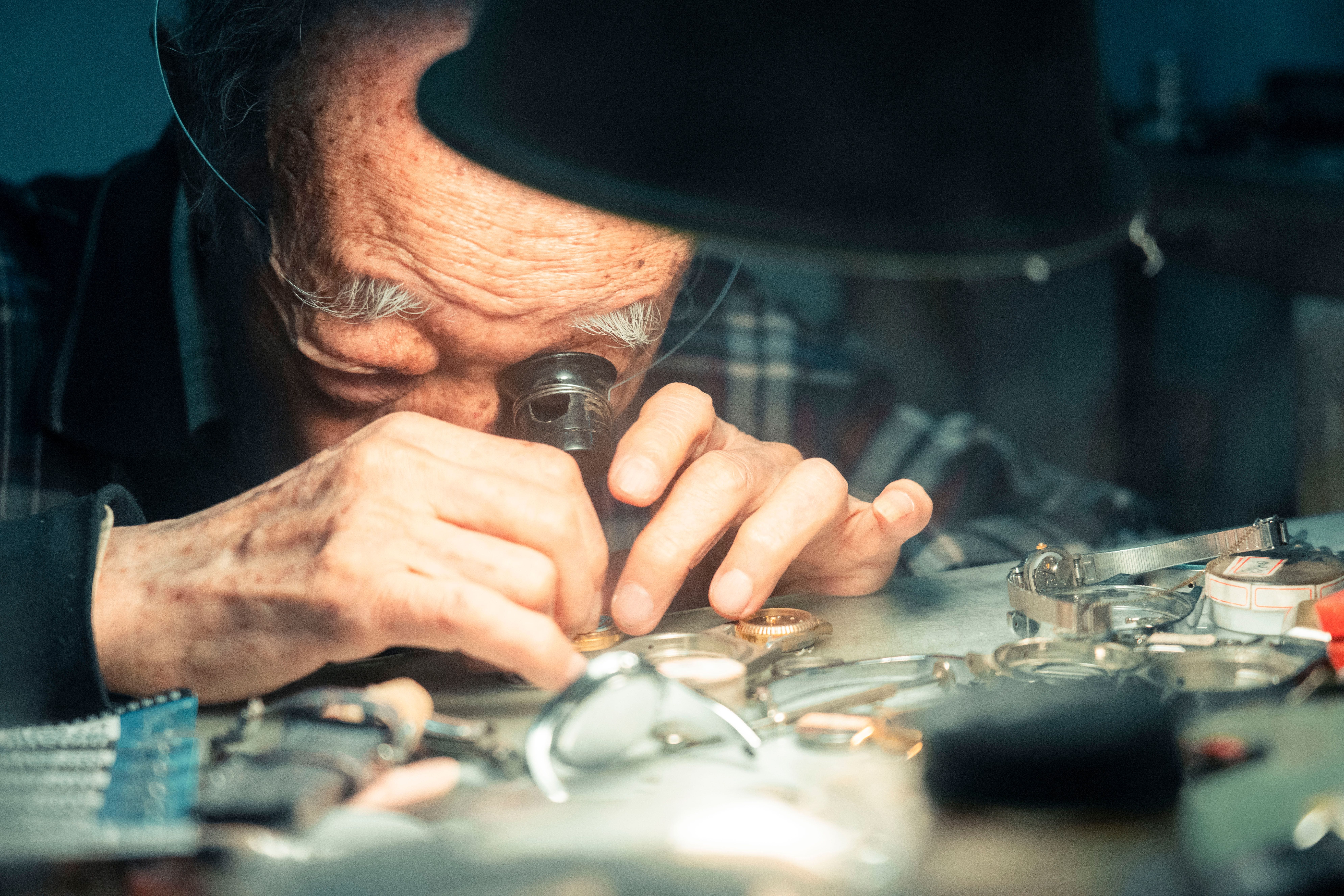
A handmade watch means more because someone’s skill and hours went into it. The same goes for a handwritten letter, or an essay written without AI.
But it all comes down to how we choose to show that care. A watch can show it through its design and its reliability. A letter carries more than handwriting — the words themselves carry feeling. And behind an essay, what matters most is the thinking and the weighing that went into it.
From Nietzsche’s typewriter to today’s AI, the meaning of creating has never been about the tool. It’s about how much of myself I’m willing to put into it. And none of those four openings said what I wanted to say. So I turned them down.
This reminds me of an example from TV:
Once the remote control was introduced, people could change the channel without getting up. So TV had to be even more entertaining.
Technology truly does change the content we produce.