


Hey, fellow Stackers 👋, and welcome to Creator Weekly.
When you feel bored, what do you do?
My usual response to boredom is to scroll through videos or social media. Recently, I read an article about boredom, and it made me think that perhaps we can learn to accept the boredom in our lives instead of constantly filling it with more information.
Boredom nudges us to change what we’re doing and look for something more meaningful. It creates a low-pressure environment where our minds can wander freely, leading to unexpected ideas. Even a quiet stretch after learning can help us process what we’ve just taken in.
How can we learn to accept boredom?
Try reducing the amount of attention you spend on social media and directing it toward your everyday experiences. Go for more walks, or pause for a moment and notice your breathing.
Now, let’s take a look at this week’s picks.

✨ Creator Spotlight
Lots of ideas, but still can’t turn them into an article?
Henrik Karlsson describes a similar struggle in this essay. He wanted to experiment with new ways of writing. Over the past three months, he tried a range of structures and approaches, yet felt he had made almost no progress.
This reminded him of an earlier period when he felt lost. At the time, he wanted to “make poetry more like mathematics,” and it took him seven years to work his way out of that uncertainty. Looking back, he realised that if he had paused to sort through his feelings, refine his ideas, and clarify the heart of the problem, he might not have needed so much time.
“Make poetry more like mathematics” was too vague. What he really wanted was a form of writing that could create an inner experience like poetry while forcing him to think more precisely.

🌍 Creator News
1. Threads adds podcast-sharing tools
Threads has introduced a new set of podcast features. These features help you showcase your podcast and share your best work, memorable moments, and guest appearances with your audience through clickable cards. You can also view the clicks and saves your podcast generates on Threads in Insights.
Meta wants Threads to become the go-to platform for podcasts and a place where people gather to discuss shows. If you are currently making—or planning to make—a podcast, you might consider distributing your content on Threads.
2. Service journalism is entering a new era
Some news organisations are investing more heavily in practical, service-oriented content that helps readers apply information to their everyday lives. The Daily Mail launched a six-week weight-loss programme called the “30g Plan,” complete with recipes, shopping lists, and reader Q&As. Pensions & Prosecco, meanwhile, uses small in-person events to help participants understand different aspects of the UK pension system and find practical ways forward.
Why are media organisations doing this? Because when AI can answer questions like “How do I lose weight?”, traditional media need to offer something AI cannot: specific, actionable guidance backed by a trusted brand. For publishers, practical usefulness is becoming another way to give readers a reason to return.
🎨 Creator Finds
1. Have you ever thought about using mould to make an album cover?
The Belfast band Robocobra Quartet created 100 images of petri-dish cultures for an album containing 100 tracks.

At first, the petri-dish experiments were simply a personal interest of Thibault, one of the band members. Later, the band realised that the process resembled the making of the album: melodies and improvisations grew and influenced one another like spores, while the accidental sounds brought an unexpected beauty and life to the songs.
Creativity can sometimes grow from small ideas. Give them some room to grow, and they may gradually become part of the work.
2. When you are developing an idea, getting lost can actually help.
Documentary filmmaker John Wilson is best known for HBO’s How To with John Wilson. He likes to set himself a very simple task, head out with a camera, and let the story gradually reveal itself along the way.

When filming his first feature, The History of Concrete, Wilson originally went to Ohio to look for America’s oldest concrete street. Once he arrived, he spontaneously decided to shadow a nearby driving school, and then followed a lead to a tattoo-restoration specialist. These unexpected discoveries eventually made their way into the film. One of its main characters was even someone he happened to meet in a liquor store.
Only after gathering enough material did Wilson begin looking for thematic connections. He cut what did not fit, gradually shaped the narrative structure, and then filled in the gaps between the different pieces.
By allowing himself to get lost, Wilson makes room for new discoveries and ideas. It also gives him richer material to work with and opens up more possibilities for the film.
3. How did people imagine the future more than a century ago?
In 1883, Albert Robida drew scenes from his vision of the future, including advertising balloons and transatlantic flying machines. On Old Book Illustrations, you can browse visions of the future imagined more than a century ago.
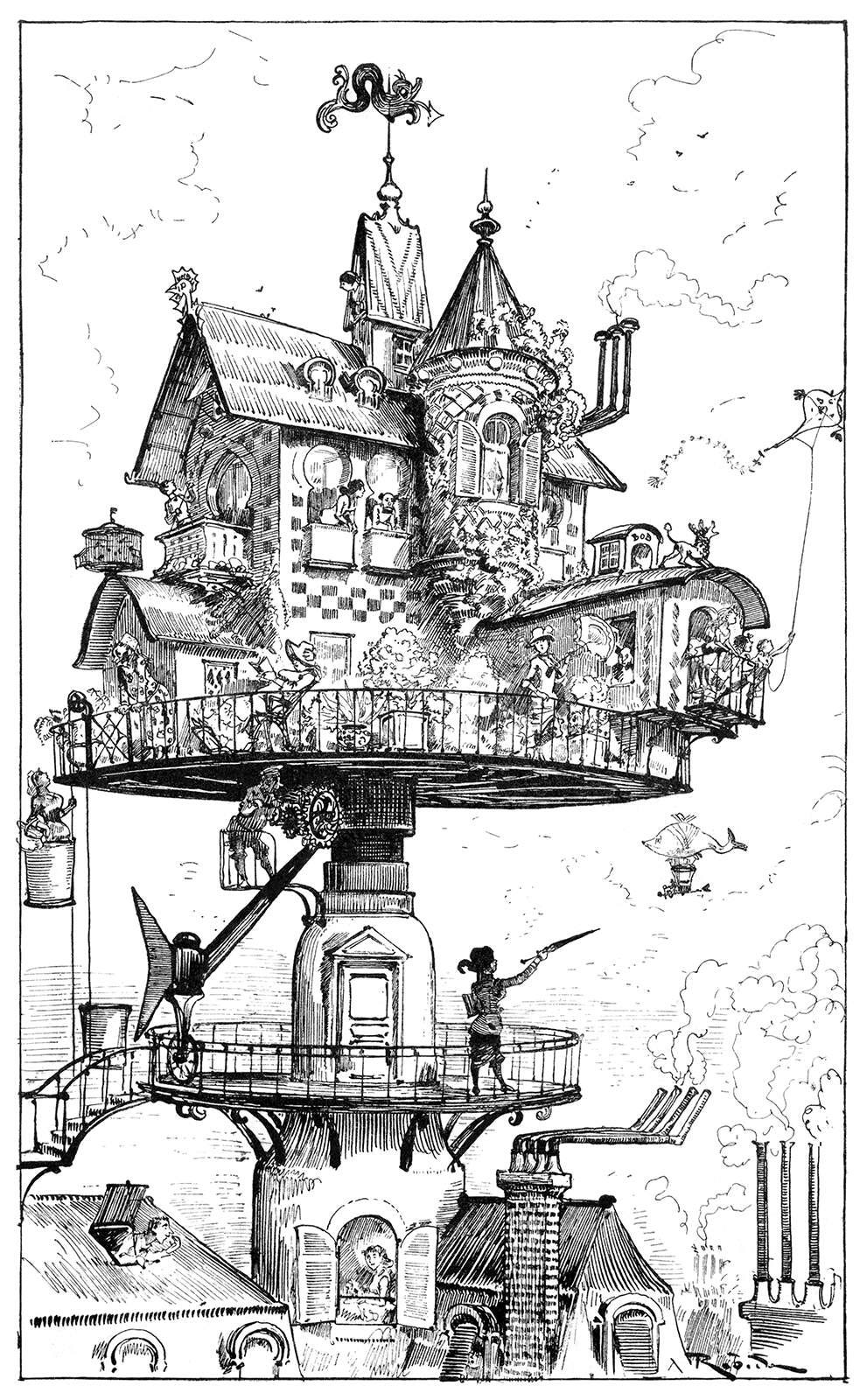
The site also collects botanical illustrations, mechanical devices, figures, and decorative motifs from old books. Following an image can lead you back to its original book, other works by the same artist, and entirely different visual worlds from the period.

Thanks for reading. That’s all for this issue.
Every week, I curate a selection of articles, news, and useful finds worth a creator's attention, delivered straight to your inbox.
Finally, have a wonderful week!