

The Future of Small Creators on Substack
Every big creator once pressed “Publish” for the first time. The question is whether the next one will still have the same chance.

Hey fellow Stackers,
Over the past few years, the creator economy has grown faster than many people expected.
More journalists are leaving traditional media to build their own newsletters.
More independent creators are turning their knowledge, passions, and life experiences into real businesses.
But every industry faces a new question as it matures.
When the biggest creators have hundreds of thousands or even millions of readers, along with teams, resources, and established business models, does someone pressing "Publish" for the first time still have a chance to be discovered?
The Creator Economy Is No Longer an Experiment
Ten years ago, many people would have questioned a simple idea:
Can an ordinary person really build a business around their work, ideas, and experiences?
Today, the answer is becoming increasingly clear.
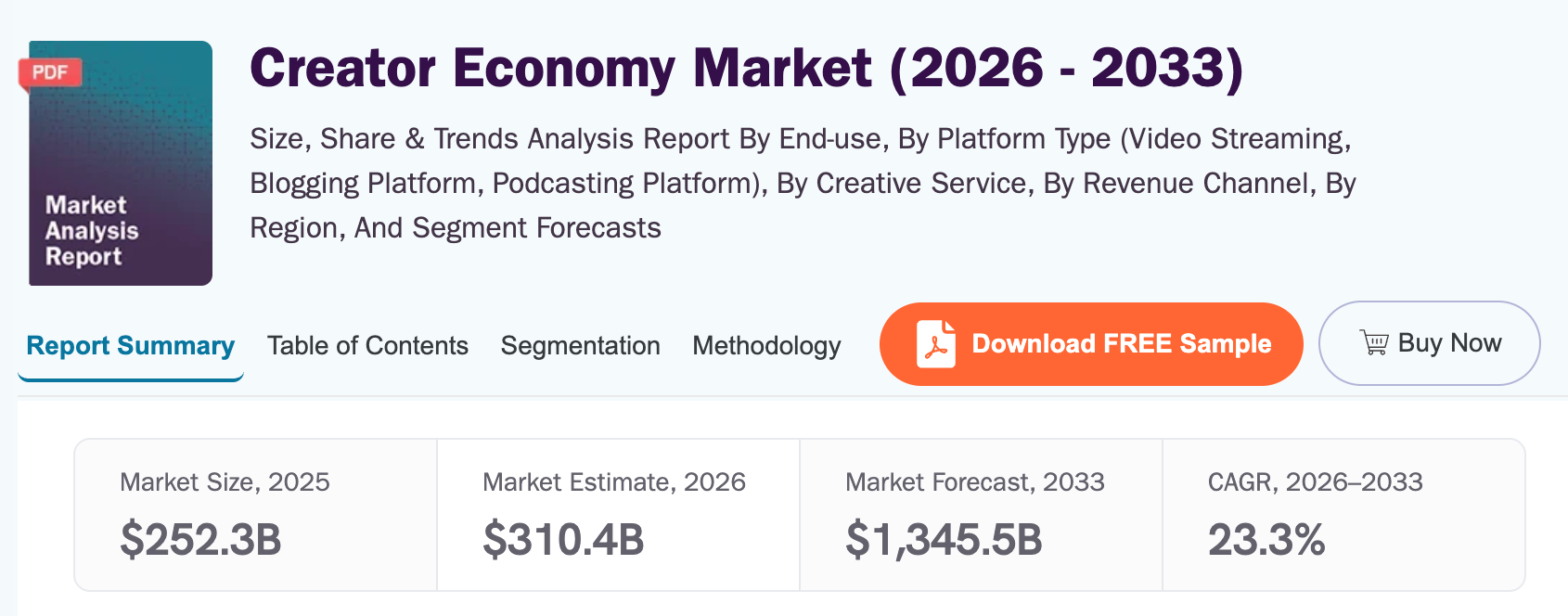
In 2025, the global creator economy reached approximately $252.3 billion and continues to grow rapidly.
Substack is one of the clearest examples of this transformation.
The platform raised $100 million in its Series C funding round, reaching a valuation of $1.1 billion. Its paid subscriptions grew from around 2 million in 2023 to more than 5 million in 2025.
But perhaps the most interesting number is not about money.
From 2020 to 2023, the number of publications on Substack grew tenfold. Today, around 60% of all publications on the platform started after 2020.
Even as Substack becomes more established, new creators are still choosing to come here and press “Publish” for the very first time.
But Success Creates a New Challenge
The more an ecosystem grows, the more competitive it becomes.
More famous journalists, bestselling authors, and creators with established teams are joining Substack.
They bring their existing influence. They also bring millions of new readers.
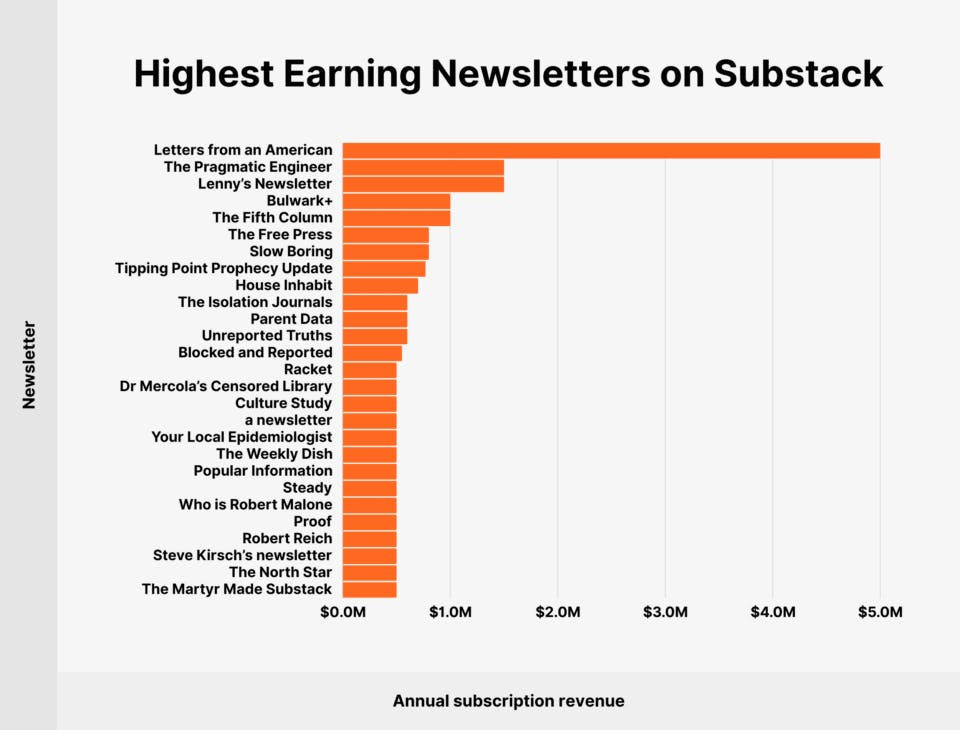
Today, some of the most successful creators on Substack are earning seven-figure incomes. Some publications have evolved into small media companies with editors, researchers, and business teams. In 2025, Substack revealed that more than 50 creators on the platform were earning over $1 million annually.
This naturally raises a question for many new creators:
When the biggest trees keep growing taller, do the newest seeds still have a chance to reach the sunlight?
Competition Exists, But It Is Not a Zero-Sum Game
This is what I find most interesting about Substack.
The growth of big creators certainly means stronger competition.
But it also brings more readers.
A reader may come to Substack because of a well-known journalist or a bestselling author.
But they will not read only one person forever.
A reader may discover a new creator through a Recommendation, stumble upon a stranger’s article through a Restack, or come across a short thought in Notes that opens the door to an entirely new creator’s world.

Notes are imperfect. Many creators still feel like they are speaking into the void. Good work can still be missed. But the idea behind them is interesting. Discovery does not have to happen only through algorithms.
Sometimes, it happens because one creator decides to point at another and say:
“I think this is worth reading.”
In traditional media, a page occupied by one voice often meant less space for another.
But in a creator network built on connections, successful creators are not necessarily just competitors.
They can also become new gateways.
The Future of the Creator Economy Is a Trust Economy
I do not believe the future of the creator economy will be free from competition.
In fact, as the industry matures, competition will only become more intense.
The biggest creators will continue to grow bigger. And that is not necessarily a bad thing.
But I believe what makes the creator economy truly unique is not that it removes competition.
It is that it creates a new form of value exchange beyond competition: trust.
A reader does not choose to pay for a writer simply because they have the biggest team or the loudest voice.
More often, they subscribe because they trust the way this person sees the world, and the experiences that shaped that perspective.
They trust that this creator will continue creating work they genuinely care about.
That is why smaller creators still have opportunities.
Their greatest advantage may be something much harder to scale: authenticity, closeness, and a direct relationship with their readers.
The goal of a small creator is not to be heard by everyone. It is to be deeply valued by someone.
After all, every creator begins with something no algorithm can fully copy: a life only they have lived.
Through years of consistent creation and genuine relationships with their readers, smaller creators can still find their own small group of people who truly believe in what they do.
A healthy creator ecosystem should not only make the biggest voices louder.
It should also continue creating opportunities for the next person who presses “Publish” to earn their first pieces of trust.
Perhaps this is the question the creator economy must continue asking as it enters its next chapter.
Thank you for reading. I’d love to hear your thoughts.
I love everything you said in this piece! So true.
I noticed all this soon after joining the platform (which was just a few months ago).
I can relate to this. There doesn't feel a sure way to get bigger and you can only build on what you're good at and the trust the reader puts in you to give it what they want - now this is easier for me and I what I do here for my main page. If you build up trust say on social issues then perhaps you can take a reader to a place they aren't as comfortable with and challenge them.
I might do that one day, you never know guys!
Plus I have to keep remindng myself that you can't keep the same people subscribing forever and although it is more competitive now that's really a good thing. I may not be number 43rd on the Fiction Leaderboard anymore but I am making a 30% more money at 70th than I did back then a year ago.
Plus with AI it's great to know the interaction with a real person, making original work, is still valued enough for me to make my living off (half coming from commissions, and not needing much to live on luckily!)
The Stacker is a very helpful. I'd have been lost without them by the way!